
What Deep Cleaning Includes and Why It Matters
Deep cleaning goes beyond weekly tidying. It targets the dirt, grease, dust, and buildup that collect in places regular cleaning often misses, such as baseboards, grout, appliance interiors, ceiling fans, and underneath furniture.
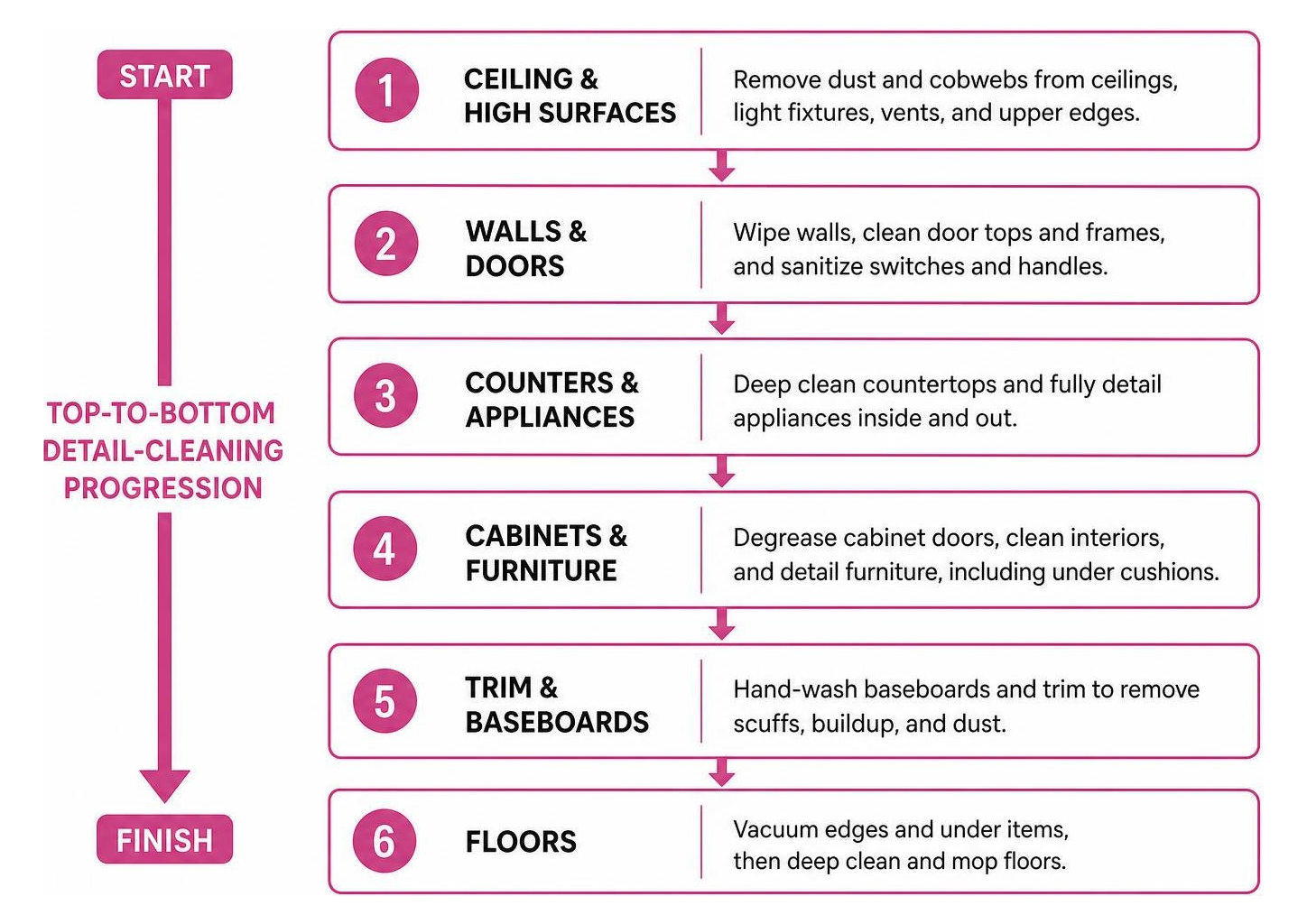
A useful way to approach it is simple:
- Clear clutter so surfaces and floors are accessible.
- Clean from the highest points in each room down to the floor.
- Detail hidden areas, high-touch surfaces, fixtures, and appliances.
- Finish by vacuuming and mopping to collect the dust and debris loosened during cleaning.
Regular cleaning helps a home look presentable. A deep clean gives it a more complete reset, which can be especially helpful after a busy season, before guests arrive, or when daily life has pushed detailed chores to the back burner.
I’m Kathy Churchman, Owner of Love My Maids. Since 2014, I have helped lead a residential cleaning team focused on consistent, thorough deep cleaning and practical service for busy North Texas households.
What Is Deep Cleaning vs. Regular Cleaning?
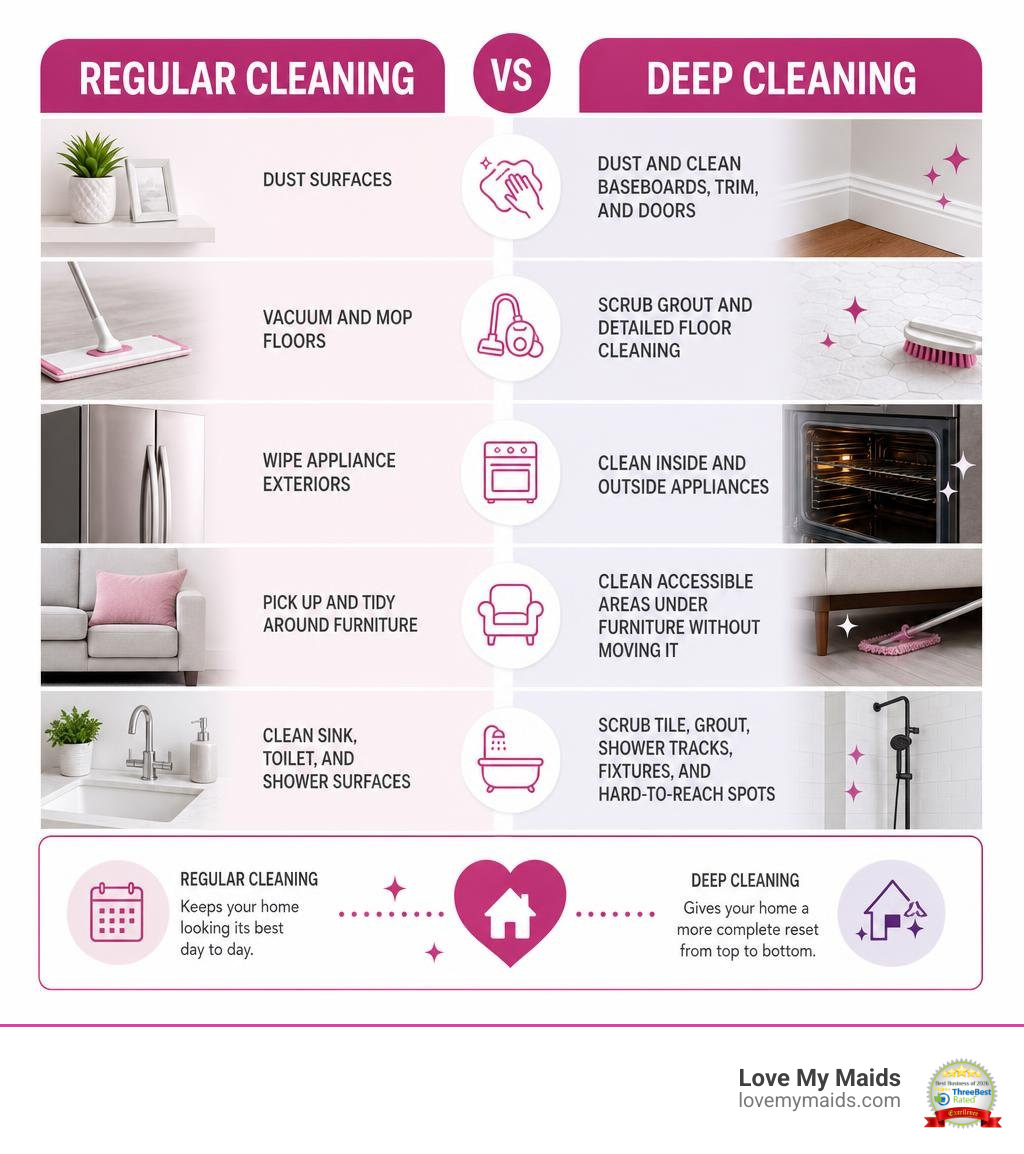
To understand how home care works, it helps to distinguish between surface maintenance and detailed sanitization. Regular cleaning keeps your living space looking tidy day to day. It handles the obvious messes: wiping down kitchen counters after dinner, giving the bathroom sink a quick scrub, taking out the trash, and vacuuming high-traffic carpet.
An intensive scrub-down, however, targets the grime that accumulates and hides in plain sight. It tackles grease baked onto range hoods, soap scum wedged into tile corners, dust coating the top edges of interior doors, and pet dander settling along baseboards. When dust and grime build up over several months, surface dusting alone simply redistributes particles into the air.
Recognizing the 5 signs your house needs deep cleaning—such as persistent indoor odors, dull-looking tile floors, visible buildup along trim, or increased allergy symptoms—helps you restore your home to an immaculate baseline.
| Feature / Task | Regular Cleaning Routine | Intensive Deep Cleaning |
|---|---|---|
| Primary Goal | Maintain daily tidiness and surface cleanliness | Eliminate built-up grease, grime, limescale, and allergens |
| Baseboards & Trim | Quick dusting or skipped | Hand-washed and detailed to remove scuffs and buildup |
| Kitchen Appliances | Exterior wiped down | Full interior detailing, degreasing vents, and cleaning seals |
| Bathrooms | Surface disinfection of toilet, sink, and counter | Shower & tub scrubbing, descaling fixtures, tile polishing |
| Cabinetry | Exterior spot wiping | Degreasing doors, hardware detailing, wiping interiors |
| Furniture & Floors | Surface vacuuming and light damp mopping | Vacuuming beneath heavy items (where possible), edge detailing, crevice tool work |
| Doors & Switches | Handled occasionally | Sanitizing all switch plates, doorframes, handles, and jambs |
| Frequency | Weekly or bi-weekly | 2 to 4 times per year, or during seasonal resets |
Routine Maintenance vs. Intensive Detailing
Daily chores and weekly routines help prevent chaos, but they rarely remove stubborn dirt. When conquering daily cleaning challenges, most homeowners focus on speed: clearing dishes from the sink, picking up stray toys, and spot-cleaning spills.
Intensive detailing shifts the focus from speed to precision. Instead of quickly running a duster over furniture, you remove items completely, wipe down wood or glass, vacuum upholstery under removable cushions, and detail the trim behind the couch. While routine maintenance keeps dirt manageable, intensive detailing removes the soil load that degrades flooring, dulls paint, and traps stale odors.
How Often Should You Schedule Deep Cleaning Services?
For most households, scheduling an intensive clean two to four times per year provides the perfect balance. However, the exact cadence depends largely on your lifestyle and household makeup.
Families with multiple pets, young children, or members with seasonal allergies often benefit from scheduling a refresh every quarter. Pet dander, tracked-in soil, and cooking grease build up quickly in busy homes. Smaller or low-traffic homes may only need a full reset twice a year. Experiencing the power of deep cleaning to improve indoor air quality and eliminate visual clutter gives you a fresh start, making weekly maintenance faster and easier.
Essential Supplies for Deep Clean Success
The right equipment and cleaning agents make the difference between scrubbing for hours with minimal results and achieving a spotless finish safely.

To protect your surfaces and your indoor air quality, assemble a dedicated kit containing:
- High-grade microfiber cloths: Unlike cotton rags or paper towels, split-fiber microfiber lifts and locks in fine dust rather than smearing it across surfaces.
- HEPA-filter vacuum with attachments: A vacuum equipped with a genuine HEPA filter captures 99.97% of fine dust, pet dander, and pollen down to 0.3 microns, preventing allergens from blowing back into the room. Use crevice wands, upholstery tools, and dusting brushes for precision work.
- Extendable dusting wands and squeegees: Essential for reaching ceiling fan blades, high return air vents, and leaving shower glass streak-free.
- EPA-registered sanitizers: Formulated to eliminate viruses and bacteria on high-touch points like doorknobs and handrails without leaving harmful residues.
When using any cleaning products, always ensure proper room ventilation by opening windows or running exhaust fans, and never mix household chemicals—such as bleach and ammonia or bleach and vinegar—as they create toxic gases. For surface-specific flooring techniques and product choices, the Deep Cleaning Your Home: The Complete Room-by-Room Guide (2026) – D and G Flooring resource outlines helpful precautions for delicate finishes.
Room-by-Room Checklist: What Does a Deep Clean Cover?
A thorough clean requires a methodical approach. The golden rule of professional housekeeping is to always clean top-to-bottom and dry-to-wet. Start at the highest ceiling corner and work your way down to the baseboards, and dry-vacuum heavily dusted trim before applying wet rags to prevent creating muddy streaks.
Reviewing checklists before tackling your home ensures no hidden corners are overlooked. You can also reference the Use Our Deep Cleaning Checklist for Every Room in Your Home guide for organizing your chores room by room.
Kitchen and Major Appliance Care
The kitchen is typically the most labor-intensive room in the home due to airborne cooking oils and heavy appliance usage.
Begin by clearing everything off the countertops and emptying the refrigerator of expired items. Place a bowl of water with lemon slices or vinegar inside your microwave and run it on high for three minutes; the trapped steam softens baked-on splatters so they wipe clean instantly.
For the oven, remove the wire racks to soak, and apply a specialized cleaner to the interior walls, allowing it to dwell while you focus on the range hood. Pull out the range hood grease filters and soak them in hot water with degreasing dish soap. Don’t forget the garbage disposal: grinding a tray of ice cubes combined with coarse salt and citrus peels sharpens the impellers and scours away foul-smelling food residue.
Bathroom Fixtures, Grout, and Tile
Bathrooms require aggressive attention to moisture-related buildup, including soap scum, limescale, and mildew.
- Showerheads and Faucets: Hard water minerals clog nozzle outlets over time. Secure a bag filled with distilled white vinegar over the showerhead using a rubber band, let it sit for 30 minutes, and scrub with a detail brush to restore full water pressure.
- Tile Grout and Enclosures: Spray tile walls and shower pans with an eco-friendly tub and tile cleaner. Use a stiff grout brush to lift dark stains from the grout lines before rinsing with warm water.
- Toilets and Vanities: Disinfect the entire porcelain structure, paying special attention to the floor bolts, hinge caps, and the narrow gap behind the tank where dust gathers. Sanitize vanity countertops, polish mirrors streak-free, and vacuum out exhaust fan covers to keep air moving efficiently.
Living Areas, Bedrooms, and Laundry Rooms
Living and sleeping zones harbor the majority of a home’s airborne fabric fibers, dust mites, and pet hair.

In living rooms, strip sofa cushions and vacuum deep into the upholstery frame crevices. Polish wood furniture, hand-wipe picture frames, and wash interior window glass and tracks.
In bedrooms, strip all bedding, including duvet covers and mattress pads. Sprinkle pure baking soda across the bare mattress surface, let it sit for 30 minutes to absorb trapped odors and moisture, and vacuum it thoroughly using a clean upholstery tool before rotating the mattress.
In the laundry room, pull out the lint trap and use a narrow vacuum wand to clean deep inside the housing, and check the dryer duct to eliminate fire hazards. Running an empty hot cycle with an appliance cleaner tablet through your washing machine removes detergent buildup and keeps mildew smells away. Completing these tasks fits well with a seasonal New Year Cleaning Checklist to start the year with a clean, comfortable environment.
DIY vs. Professional Deep Cleaning: Time, Cost, and Value
Deciding whether to tackle a whole-home scrub yourself or bring in an experienced team comes down to evaluating your available time, physical energy, and standards.
Deep cleaning an average three-bedroom, two-bathroom house by yourself takes between 8 and 14 hours of demanding physical labor. When done solo, homeowners often find themselves exhausted after completing just the kitchen and master bathroom, leading to rushed or skipped tasks in guest rooms, hallways, and living areas.
By contrast, an experienced professional team arrives with industrial-grade equipment, commercial HEPA vacuums, and standardized room checklists. A trained crew of two or three cleaners can thoroughly sanitize the same home in 2 to 4 hours, reaching high fan blades and scrubbing baseboards without disrupting your entire weekend.
For those planning a move, comparing options like Cleaning Before Moving In: DIY Scrub-Down vs. Hiring Help helps clarify your timeline. When leasing, analyzing whether Is a Move-Out Deep Clean Really Worth the Cost? often shows that hiring professional cleaners can pay for itself by protecting your security deposit.
Frequently Asked Questions About Deep Cleaning
How Long Does It Take to Complete a Deep Cleaning in an Average Home?
The total time required depends on your home’s square footage, the number of bathrooms, the presence of pets, and when the house was last thoroughly detailed. On average, a standard home takes 6 to 8 labor hours. A single person tackling the project alone should expect to spend 8 to 14 hours over a weekend, while a professional team completes the work much faster through division of labor.
What Is Typically Excluded from a Standard Deep Clean?
While comprehensive, standard residential deep cleans focus on accessible indoor surfaces and interior residential detailing. Standard services generally exclude exterior window washing, biohazard cleanup, specialized carpet shampoo extraction, wall repainting, and exterior patio power washing. If you need specialty add-ons like interior refrigerator or oven scrubbing, confirm they’re selected when booking.
How Should You Prepare Before Cleaners Arrive?
To get the most value out of your service, pick up loose surface clutter such as clothing, paperwork, and children’s toys before the cleaning team arrives. Clearing kitchen counters and bathroom vanity tops lets technicians spend their time scrubbing, degreasing, and polishing instead of organizing personal items. Secure pets in a comfortable room or crate, and highlight any specific focus areas with your cleaning team beforehand.
Conclusion
A comprehensive whole-home refresh eliminates stubborn dirt, removes seasonal allergens, and creates a peaceful living environment for your family. Rather than spending your valuable weekends scrubbing grout, washing baseboards, and dusting ceiling fans, let our dedicated professionals do the heavy lifting for you.
Love My Maids is proud to serve homeowners across West DFW, including Arlington, Grand Prairie, Mansfield, Fort Worth, Euless, Bedford, Hurst, and North Richland Hills, TX. As a veteran-owned, locally focused company, we differentiate ourselves with fully employed W-2 cleaners, a dedicated cleaner assigned to your home, and an ironclad 24-hour satisfaction guarantee.
Give your home the attention it deserves—contact Love My Maids today to book your professional Deep Cleaning Service and experience a healthier, spotless home!
Live in the West DFW area? Request your free quote from Love My Maids now!
Quote Form